
Our Head Gardener Answers Your Most Asked Bare Root Questions

While some people find bare root roses intimidating, they are an easy, affordable way to add some wonderful new roses to your garden.
Our Rosarians regularly get asked about storing, planting and caring for bare roots, so below our Head Gardener and Rosarian Mat answers your most asked bare root rose questions.
What is a bare root rose?
A bare root rose is a young rose plant in its dormant state, consisting of just the pruned stems and roots without any leaves, flowers or foliage on it.
What are the benefits of buying a bare root rose over a potted rose?
Bare root roses are the cheaper, more affordable way to buy a rose and they are also easier to transport than potted roses, which is helpful if you are buying roses in bulk for larger garden projects such as hedging.
Buying a bare-root rose and planting it during the winter months also gives the rose more time to establish stronger roots before it starts shooting new growth in the spring.
When can I buy a bare root rose?
Our bare root roses are available to buy through the winter months each year, starting from mid-November. If there is a bare root you want to order outside of this time, you can pre-order it on our website for delivery from mid-November.
Do I need to plant my bare root as soon as it arrives?
No, you don’t need to plant your bare root rose as soon as it arrives; you can leave it in the clear bag it is packaged in for up to a week, as long as it is in a cool, shady area that is no more than five or six degrees.
If you are still not ready to plant the rose after a week, we recommend storing it in a bucket of cold water for up to two weeks.
When and where should I plant my bare root?
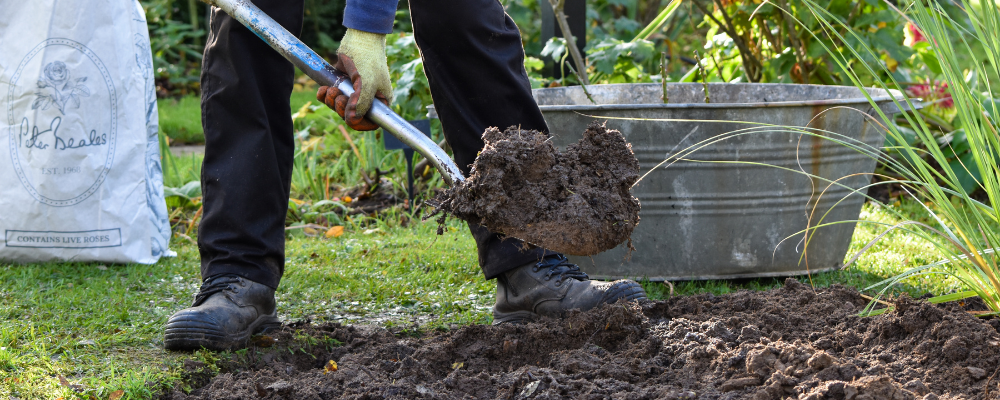
Bare root roses need to be planted during the dormant season, from November to early March at the very latest, but the earlier you plant your rose, the more time the roots will have to establish before the spring.
When choosing where to plant a rose, we advise looking at the label on the bare root. This will give you a rough idea of the size the rose will grow to within two to three years and help you choose the best location for planting it in your garden.
Can I plant my bare root rose after March?
For best results with your bare root, we wouldn’t advise planting your rose after March, as this doesn’t give the rose enough time to establish strong roots before it enters its growing state. This means that it would need a lot more watering and feeding to become a sturdy plant and it may not produce flowers in its first year.
Do I need to do anything to my bare root before I plant it?
Yes. Once you receive your bare root rose, you need to soak it in a bucket of water for at least a couple of hours before you plant it. This rehydrates the roots so that they can absorb water from the soil once it has been planted.
How do I plant my bare root rose?
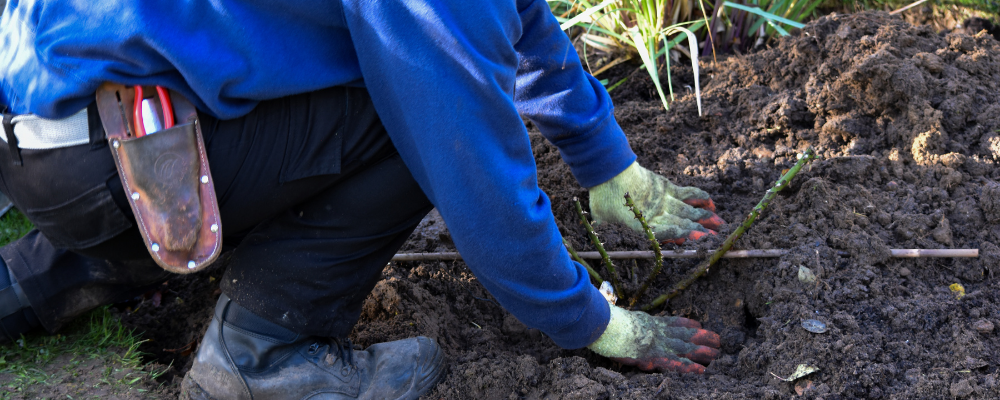
At Peter Beales Roses we would advise planting your bare root in freshly prepared soil with a bit of Mycorrhizal Fungi sprinkled over the roots. The most important part of planting a bare root is to make sure the union of the rose is planted at least an inch below the ground and that the roots are sitting firmly within the soil.
To see our full step-by-step guide on planting your bare root, click here and watch the video.
How can I tell if my bare root rose is alive once I have planted it?
If you are worried that your bare root might not be alive once you have planted it, you can use a knife, some secateurs or your fingernail and slightly scrape back the bark on a little section of one of the stems. If it is green underneath, then your rose is happy and healthy and will have new growth on it in the spring.
How do I look after my bare root once it has been planted?
Bare root roses don’t require a lot of maintenance until the ground starts to warm up at the beginning of spring.
As it gets to the end of February, you can add a layer of mulch and some slow-release fertiliser around the base of your rose to boost the nutrients in the soil. Then, once your rose starts to produce new growth, it is important to make sure it is getting plenty of water, and feed the rose every couple of weeks.
If you would like some more advice on caring for your rose through the spring, our Rosarians are always happy to help.
Want to learn more about planting roses?

Comments are closed here.