Diseases that affect Roses
Roses, while beautiful and rewarding to grow, can be susceptible to a variety of diseases that affect their health and appearance. Some of the most common issues include black spot, mildew, rust, and canker. Black spot causes unsightly dark patches on leaves, leading to yellowing and leaf drop. Mildew, in both its powdery and downy forms, can stunt growth and distort leaves, especially in dry or poorly ventilated conditions. Rust thrives in warm, damp weather, creating bright orange spots that can spread and damage the entire plant. Canker, often affecting older roses, leads to gnarled lesions that can harm stems and branches.
Understanding these diseases and how to manage them is key to keeping your roses healthy and thriving throughout the seasons.
Black Spot
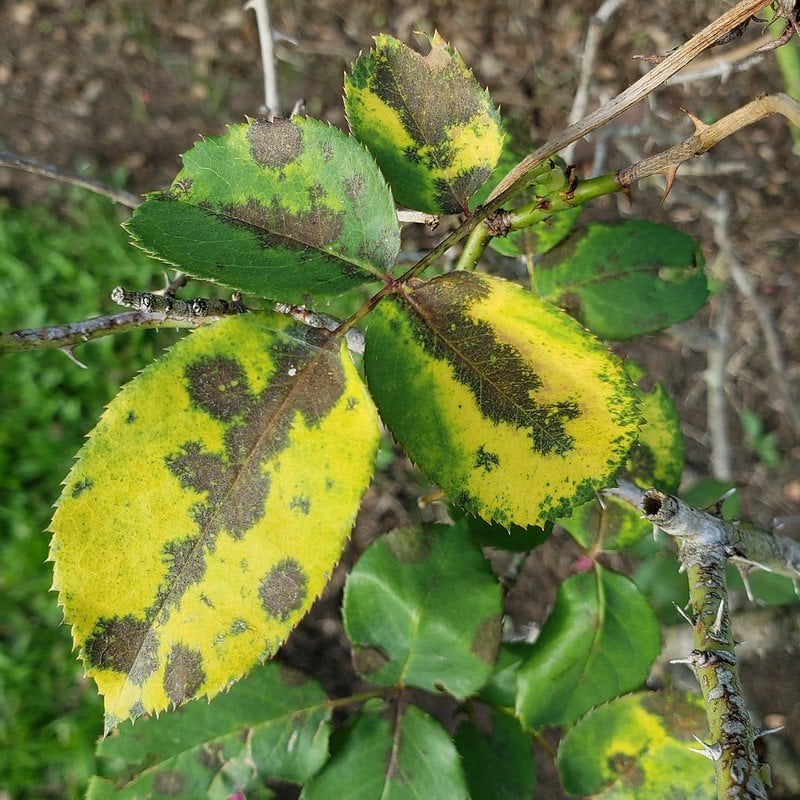
Black spot is one of the most common rose diseases, much like the common cold in humans. Few rose varieties are completely resistant, though some cope better than others. A few black spots aren't too unsightly, and the presence of the disease shouldn't put you off growing roses.
The disease is usually most noticeable from mid-summer onwards, although some varieties may be affected earlier, especially after a mild winter. Black spot spores can be airborne or transferred between plants on tools like secateurs. Once the spores land on a suitable leaf, small round black or dark brown spots will appear. These spread, turning the rest of the leaf yellow before it falls off.
It's important to collect and burn fallen leaves, as the spores can survive in the soil over winter and infect plants the following year. In severe cases, the spores can affect branches, putting the entire plant at risk. To prevent this, prune infected branches and apply a winter wash with a mild sterilant, which can help control fungal diseases like black spot. Regularly hosing down the plant can also help wash away spores.
Some people suggest spraying roses with skimmed milk to deter black spot, although we haven’t tested this method ourselves.

Mildew
There are two types of mildew that affect roses: downy mildew and powdery mildew. Downy mildew is less common and usually affects roses grown in greenhouses. It can be triggered by sharp differences between day and night temperatures or poor ventilation. Unlike powdery mildew, downy mildew appears more brown or blue and attacks mature leaves first. To prevent it from spreading, use a fungicide and remove any affected leaves.
Controlling mildew organically is difficult, but well-cared-for roses are less likely to be affected. If mildew does appear, remove and destroy the affected leaves.
Powdery mildew is the most common type found in gardens. It usually occurs in dry, airless conditions, first appearing as a grey or white powder on young leaves and shoots, which become distorted and stop growing. If left unchecked, it will spread to older leaves, stems, and flower buds, preventing them from opening and causing them to fall off.
Powdery mildew often shows up after the first flush of flowers when summer temperatures rise. Regular spraying earlier in the season can help prevent it. Once it appears, it’s hard to cure, so it's best to cut away and destroy any infected parts. Fungicides can help stop it from spreading further.

Rust
Rust thrives in warm, damp conditions and can severely damage a rose if the infestation is severe. The first signs usually appear in early summer as small bright orange spots on the undersides of leaves. These are often missed until the disease spreads, with the spots growing larger and turning brown, then black. In severe cases, the spores will kill the leaves and spread to the stems, causing them to die back.
At this advanced stage, control is nearly impossible, and the best solution is to dig up and burn the plant. However, if caught early, remove and burn the infected leaves and monitor for re-infection. Like black spot, rust spores can survive on fallen leaves or in the soil over winter. Collect fallen leaves and wash the plant and soil with a fungicide during dormancy. The next season, start a regular spraying routine early to prevent re-infection.

Stem Canker
Canker is rarely seen on younger, well-maintained roses, and tends to affect older plants with a lot of old wood. It shows up as gnarled, swollen lesions, often surrounded by dead, peeling bark. Canker usually forms where the plant has been damaged, like at the site where it was originally grafted.
If the affected stem can be removed, simply prune it. However, canker often appears in tricky spots where pruning isn’t possible. If the plant is valuable, carefully cut away the damaged tissue using a sharp knife, continuing until only healthy, clean pith remains. Cover the wound with grafting wax to protect it from further infection. If the rose isn’t vital to the garden, the easiest option is to dig it up and burn it.