
Pests that affect Roses
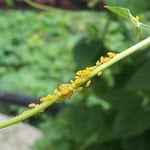
Aphid
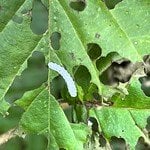
Caterpillar
These tiny creatures will crawl up the stems of roses and, with great enthusiasm, feast on rose leaves. They often remain on the plant since the mother moth laid her eggs on the underside of a leaf, and as she won't stay around, it's likely that the presence of these damaging caterpillars goes unnoticed until significant portions of the leaves are suddenly missing. When one is spotted, it should be removed and disposed of. If there are too many to manage this way, unfortunately, the only option left is to spray with insecticide. Be sure to apply it to both sides of the leaves.
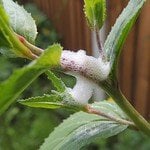
Cuckoo Spit (The Froghopper Beetle)
Cuckoo-spit is more of an eyesore than a threat. It's the unattractive foamy white substance often found in leaf joints or around flower buds. Inside it, you'll find a young froghopper beetle, which, once fully grown, will hop around the roses, feeding on the sap from young shoots and buds. It’s unlikely to cause significant damage, apart from the occasional wilting bud, and they are rarely found in large numbers. The best way to control it is to give the cuckoo-spit a good spray with a hosepipe before the young froghopper matures.

Deer
If you live in a rural area where both rabbits and deer coexist, your roses are at greater risk. When there’s snow on the ground, deer become bolder in their search for food and may venture into the garden. In the USA, where deer are less timid, this poses a more significant problem than it does here in the UK. Perimeter fencing can help, but the temptation is to cover it with climbing and rambling roses, which places them at the deer’s height. If you can manage a bit of extra pruning around the perimeter, this can help solve the issue. Additionally, planting thorny varieties, such as some Rugosa, may deter the deer even further.
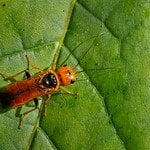
Leaf Rolling Sawfly
This insect can cause concern due to the devastation that occurs after a sawfly lays its eggs on rose leaves, which can be visually alarming in severe cases. The parent actually injects a chemical secretion into the leaf, causing it to curl and protect the eggs. When the grubs hatch, they will feed on the leaves, rendering them completely useless to the plant. This is a challenging issue to address because the grubs are shielded by the curled leaves and won't be affected during spraying. The best course of action is to remove the affected leaves and burn them. The long-term health of the plant shouldn't be significantly impacted, but in the short term, it may be slightly more susceptible to disease than usual.
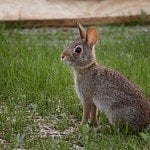
Rabbit
Cute little bunnies are not as innocent as they seem, and they particularly enjoy munching on roses. Young rabbits love the tender new shoots within their reach and will systematically seek them out as they sprout in spring. Older rabbits can cause significant damage, especially in winter, by stripping the bark from the plants, often standing on their hind legs to reach the taller stems. If you live in an area inhabited by these creatures, you'll need to take measures to protect your roses. A wire mesh fence can help keep them out, but ensure there are no rabbits in the garden when you install it; otherwise, you'll only exacerbate the problem, as rabbits breed like roses produce leaves. Another option is to put individual fencing around the base of each rose while they are still young. Although this may look unsightly, it will give the roses a better chance against the rabbits. There are also chemicals that can be sprinkled on the ground to deter rabbits, but these are rarely completely effective.
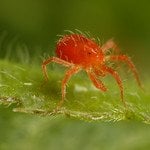
Red Spider Mite
This tiny mite thrives in warm, airless conditions and is commonly found in greenhouses or conservatories, but it's also becoming more prevalent in gardens, especially during hot, dry spells. The mite is extremely small and often goes unnoticed, even though it can infest in large numbers. The fine web it weaves between the leaves and the damage it causes are telltale signs. The leaves may become pale and limp, sometimes developing a dirty bronze discolouration before they ultimately drop off. The obvious solution is to spray the undersides of the leaves, but by that point, much of the damage has already occurred. If the plant is in a pot under glass, move it outside for a while and spray it with water occasionally; the spider mite won’t thrive in its new environment and will either relocate or die. For plants in the garden, wash them down daily until the mite is gone, but try to do this in the morning or evening when the sun isn’t too strong, as direct sunlight can scorch the leaves.
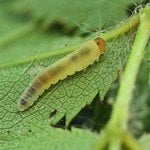
Rose Slug Sawfly
These small slug-like creatures, which are the larvae of blackfly, are responsible for eating away the flesh of rose leaves, leaving just a skeleton of veins behind. They will completely finish one leaf before moving on to the next. Unfortunately, the only effective method of control is to spray with insecticide. I can’t speak to the effectiveness of organic pest sprays when it comes to dealing with this pest.
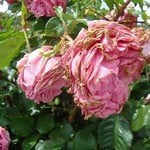
Thrips
These small slug-like creatures, which are the larvae of blackfly, are the ones that consume the flesh of rose leaves, leaving only a network of veins behind. They will completely devour one leaf before moving on to the next. Sadly, the only effective control method is to spray with insecticide. I can’t comment on the effectiveness of organic pest sprays for this particular pest.